Why Variegated Philodendron Needs Different Humidity Than Heartleaf
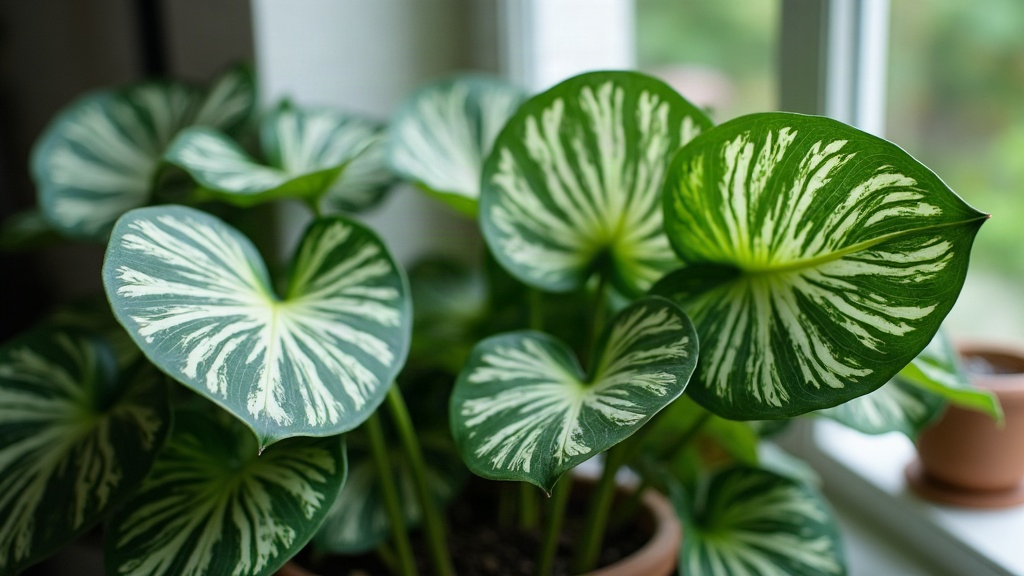
If you switched from a plain green heartleaf philodendron to a rare variegated one and noticed it sulking despite following the exact same routine, the missing piece is almost certainly humidity. Variegated philodendrons like Pink Princess, White Knight, or Florida Beauty carry less chlorophyll in their leaf tissue, and that one difference changes everything about how they handle moisture. Here’s why two plants that look like cousins actually need two very different environments to do well.
The Science Behind the Difference
A standard heartleaf philodendron (Philodendron hederaceum) runs on fully green leaves, loaded with chlorophyll, and that gives it a sturdy, efficient system for managing water loss through its stomata. It adapted long ago to put up with the ups and downs of indoor humidity, and its leaf tissue stays uniformly tough no matter what the air throws at it.
Variegated types play by different rules. Those white, cream, or yellow patches on the leaves have no chlorophyll at all. And that absence matters:
- The cell walls in those sections are thinner and more fragile
- They can’t photosynthesize or regulate moisture the way green tissue does
- Water escapes faster from these patches
- They crisp, brown, and collapse much more easily in dry air
Basically, a variegated leaf is running with half its engine missing. What a heartleaf shrugs off without a second thought can genuinely injure a variegated plant.
What Humidity Level Does Each Plant Actually Need?
Standard heartleaf philodendron:
- Does well at 40 to 50% humidity
- Tolerates the typical household range (often sitting around 30 to 40%)
- Rarely complains unless the air drops below 20%, which is genuinely dry
Variegated philodendron (Pink Princess, White Knight, Birkin, etc.):
- Wants 60 to 70% humidity to keep its variegation stable and healthy
- Drop below 50% and you’ll usually see browning along the edges, especially on the white or cream patches
- New leaves may come in smaller, or noticeably greener, as the plant tries to protect itself
That gap is exactly why one grower’s heartleaf sits happily on a windowsill for years, while a variegated cutting from the very same genus turns crispy in that same spot within a week.
Signs Your Variegated Philodendron Needs More Humidity
- Brown, crispy edges that show up specifically on the white or pale sections, not the green ones
- Leaves that curl tight but relax again once you mist or boost humidity
- New leaves that unfurl slowly, or sometimes stall halfway and never fully open
- A shift toward more green growth, which is the plant essentially retreating to survive
If your heartleaf next door looks fine but the variegated one is showing these symptoms, that’s not a care mistake on your part. It’s a clear signal the humidity simply isn’t where it needs to be.
How to Raise Humidity for Variegated Varieties
- Get a humidifier and keep it running near the plant. Aim for a steady 60 to 70%, not the quick spritz-and-forget of misting, which barely lasts an hour.
- Cluster your plants together. Grouping them creates a little pocket of humid air around the group.
- Consider a humidity tent or a small greenhouse cabinet for heavily variegated plants like Pink Princess or Pink Congo, particularly while they’re propagating or bouncing back from stress.
- Skip the pebble tray as a standalone fix. It nudges humidity up by maybe a percent or two, nowhere near enough for high-variegation plants.
- Buy a hygrometer. Guessing humidity by feel is unreliable, and with variegated plants, precision actually matters.
Should You Treat All Philodendrons the Same?
No, and that’s a mistake people make constantly, assuming “philodendron care” is one-size-fits-all across the whole genus. It isn’t:
- Heartleaf philodendron is tough and forgiving, it adapts to almost anything
- Variegated cultivars are genetic mutations with compromised tissue, so they need more deliberate, hands-on environmental control
- The higher the percentage of white or cream on a leaf, the more sensitive that plant becomes to humidity swings
That’s precisely why serious collectors often keep their rarer variegated specimens tucked away in dedicated grow cabinets or humidity-controlled rooms, well away from the easier, all-green plants on the regular shelf.
Conclusion
Your variegated philodendron isn’t being difficult on purpose. It’s simply built differently from a standard heartleaf, with leaf tissue that’s less capable of holding onto moisture. Once you accept that variegation trades away some of the plant’s natural resilience, you can set humidity accordingly (60 to 70% instead of 40 to 50%) for these rarer cultivars specifically. Pick up a hygrometer, invest in a real humidity source, and you’ll notice steadier variegation and a lot fewer crispy edges from here on out.